MammalsOur low intensity grazing supports a growing vole population, which in turn supports kestrels and barn owls
We have recorded 19 species of mammal so far.
Field Voles Microtus agrestis are abundant since we moved from regular silage cutting and sheep grazing to low intensity cattle grasing. The resulting grass thatch provides ample habitat and has increased the owls and raptors we find.
A bat survey recorded five bat species Brown Long-eared Bat Plecotus auritus, Noctule Bat Nyctalus noctula, Whiskered Bat Myotis mystacinus, Soprano Pipistrelle Pipistrellus pygmaeus and Common Pipistrelle Pipistrellus pipistrellus, but we expect to find more with more thorough surveying.
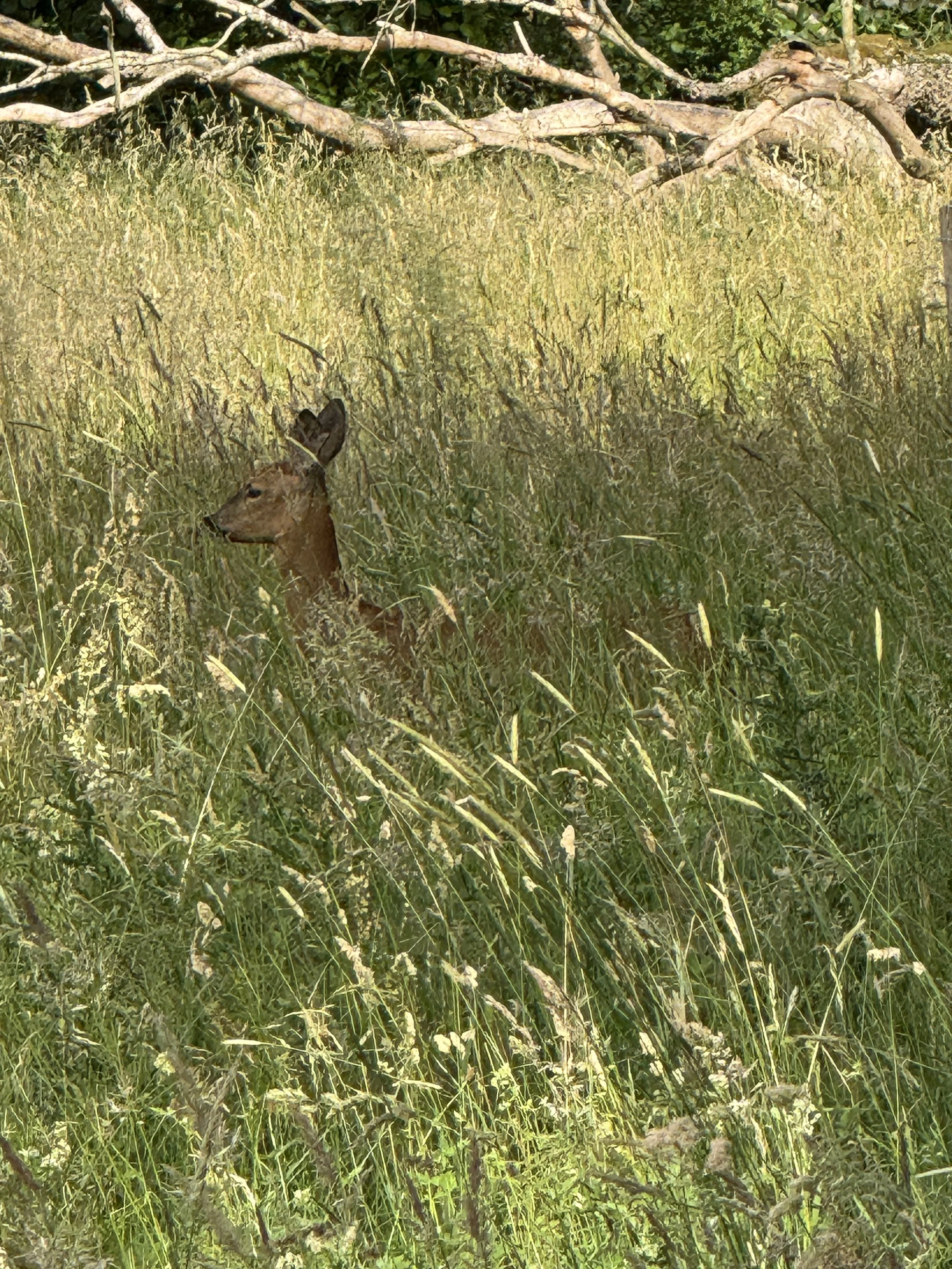
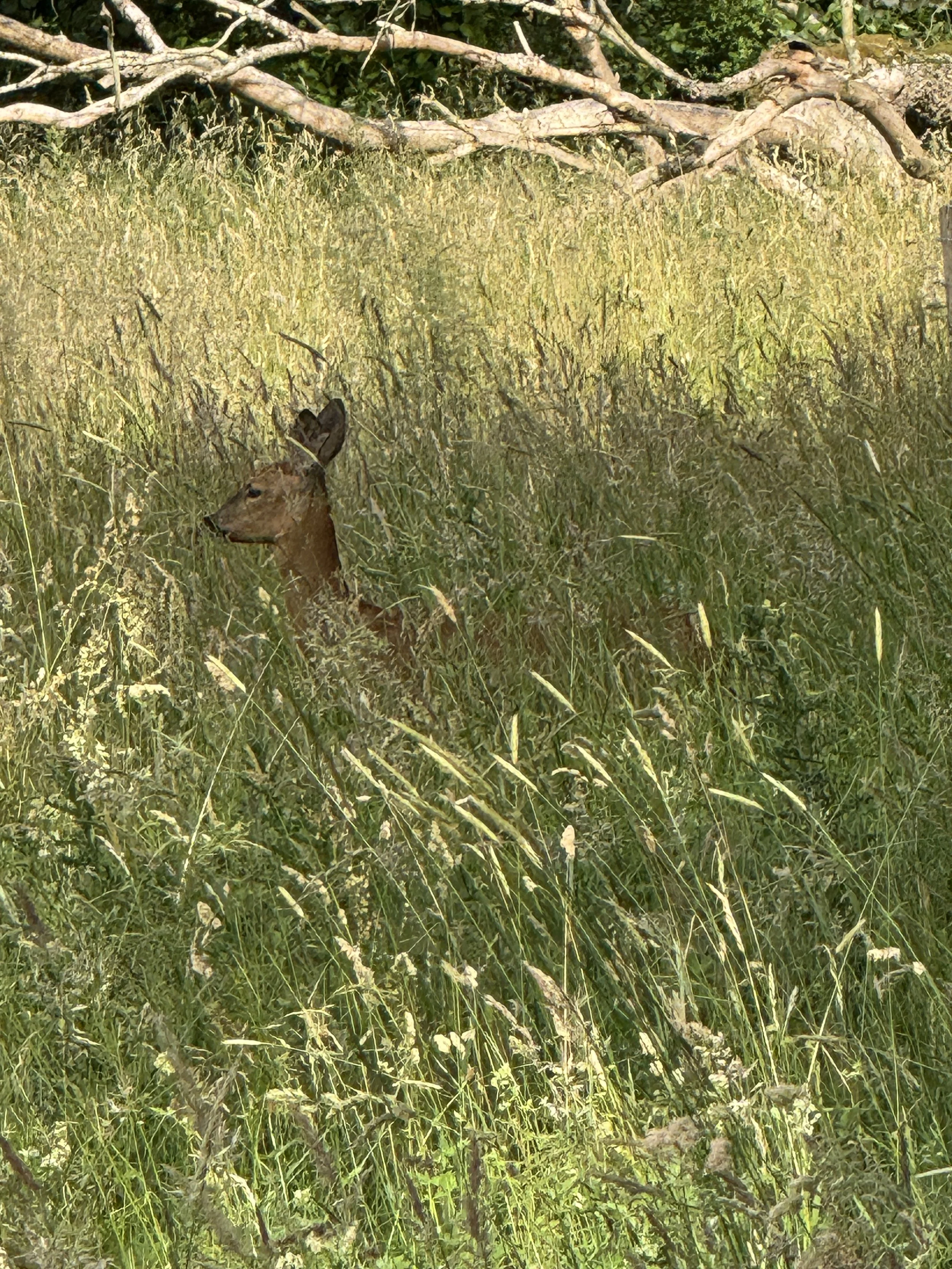
There are two species of deer, the native Roe Deer Capreolus capreolu sand the invasive Muntjac Muntiacus reevesi. Without natural predators the numbers of both are too high and we are culling to reduce the pressure they place on our woodlands. Another invasive mammal is the Grey Squirrel Sciurus carolinensis, which we will similarly cull to reduce the damage they cause to our woodland by bark stripping trees.
Other mammals recorded so far include Red Fox Vulpes vulpes, European Badgers Meles meles, Brown Hares Lepus europaeus, Stoat Mustela erminea, and Weasel Mustela nivalis.
We have been surveying for Hazel Dormice Muscardinus avellanarius in our former coppice woods, but have not yet recorded their presence, and we still plan to search for Harvest Mice Micromys minutus.